
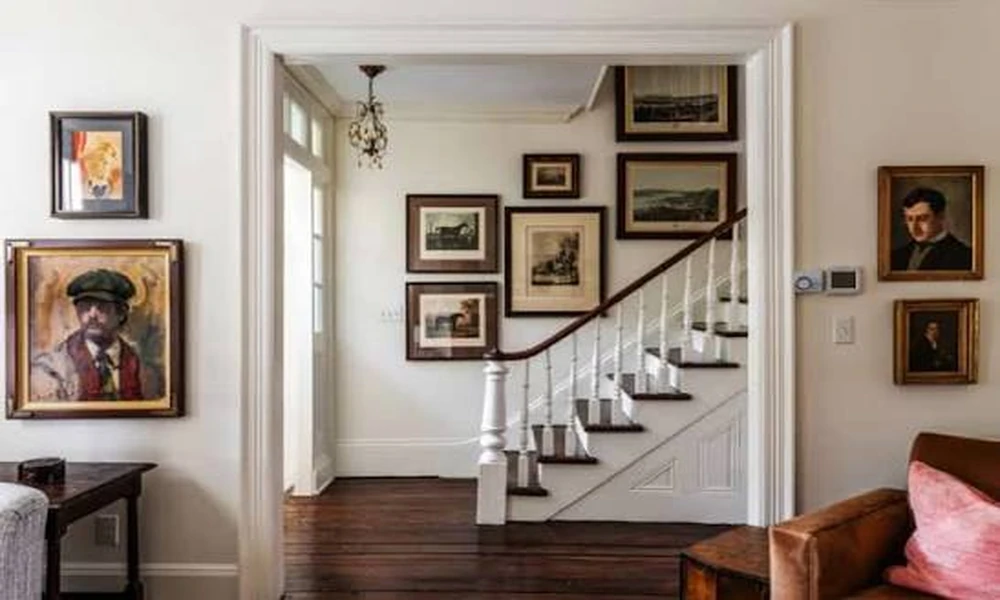
Halifax has always been a town that balances heritage with progress. Its industrial past is visible in the grand mills, imposing stone buildings and elegant Victorian streets that define much of the area today. Landmarks such as The Piece Hall have shown how historic architecture can be successfully reimagined for modern life without losing the character that makes it special.
The same principle increasingly applies to people’s homes.
Across Halifax and the surrounding villages, homeowners are investing not only in extensions, renovations and energy improvements, but also in technology that makes everyday living simpler, more comfortable and better connected. The challenge isn’t whether modern technology belongs in an older property. It’s how to integrate it sympathetically.
When approached properly, intelligent home technology should enhance the way a property functions while remaining almost invisible.
Character Properties Demand A Different Approach
Unlike many modern housing developments, Halifax offers an incredibly varied housing stock.
Stone terraces.
Victorian villas.
Georgian townhouses.
Converted mills.
Farmhouses on the edge of Calderdale.
Each comes with its own quirks, construction methods and practical considerations.
Solid masonry walls can affect wireless coverage.
Original plasterwork may limit cable routes.
High ceilings influence speaker placement.
Traditional layouts often require creative thinking when introducing lighting control or home automation.
This is why no two installations should ever be approached in exactly the same way.
Good Design Starts Long Before Installation
One of the biggest misconceptions surrounding smart home technology is that it’s all about gadgets.
In reality, successful projects begin with careful planning.
Before selecting products, experienced designers first consider how the property is used.
How does the family spend time together?
Where do people entertain guests?
Which rooms receive the most use?
How will the property evolve over the next decade?
Answering these questions often has a much greater impact on the finished system than choosing between two different brands of equipment.
Technology should support everyday life, not dictate it.
Restoring Older Homes Creates New Opportunities
Across Halifax, many homeowners are investing heavily in improving older properties.
Loft conversions.
Rear extensions.
Open-plan kitchen renovations.
Garden rooms.
Cinema spaces.
These projects provide the perfect opportunity to think about technology before walls are closed and decoration begins.
Planning infrastructure during building work makes it significantly easier to conceal cables, position equipment sensibly and future-proof the property for changing technology.
Waiting until after the decorating has finished often limits what’s achievable and can introduce unnecessary disruption.
Invisible Technology Often Delivers The Best Results
Walk into a well-designed smart home and you probably won’t notice much technology at all.
The lighting simply feels right.
Music appears where it’s needed.
Television equipment doesn’t dominate the room.
Wi-Fi works consistently throughout the house.
Heating adjusts automatically.
The experience feels effortless because the technology itself isn’t competing for attention.
This philosophy is particularly important inside Halifax’s older homes, where preserving architectural features is often just as important as improving functionality.
Discreet ceiling speakers, hidden equipment cabinets and carefully planned control systems allow homeowners to enjoy modern convenience without compromising original character.
Reliable Networks Are Becoming Essential
Many households now rely on far more connected devices than they did even five years ago.
Streaming platforms.
Video calls.
Security cameras.
Lighting systems.
Heating controls.
Gaming consoles.
Smart televisions.
Without reliable networking, even expensive equipment struggles to perform properly.
Older properties can present particular challenges due to thick stone walls and layouts that were never designed with wireless coverage in mind.
Rather than simply adding additional wireless boosters whenever problems appear, carefully designed networking infrastructure often provides a far more reliable long-term solution.
Home Cinema Has Moved Beyond Dedicated Cinema Rooms
The phrase “home cinema” still makes many people picture a purpose-built basement with rows of luxury seating.
While those projects certainly exist, today’s installations are often much more practical.
Media walls.
Living rooms.
Garden buildings.
Converted lofts.
Family spaces.
Modern displays, discreet speakers and intelligent lighting allow homeowners to create immersive entertainment areas without dedicating an entire floor of the house to a cinema.
This flexibility makes high-quality AV systems accessible to a much wider range of properties throughout Halifax.
Heritage And Technology Can Work Together
There was a time when introducing technology into older homes often meant compromise.
Visible cabling.
Large equipment racks.
Bulky speakers.
Multiple remote controls.
Thankfully, today’s systems are considerably more refined.
Technology can now blend into the architecture rather than competing against it.
The result is a property that retains its original character while offering all the convenience expected from modern living.
Calderdale’s Housing Deserves Individual Solutions
One reason Halifax remains such an interesting place to work on residential projects is the sheer diversity of its surrounding communities.
Homes in Skircoat Green differ significantly from those in Sowerby Bridge.
Properties in Savile Park have different requirements to rural homes around Ripponden or Shelf.
Period terraces require different planning to contemporary executive houses.
There is no universal blueprint that suits every property.
Instead, every successful installation begins by understanding both the building and the people living inside it.
Thinking Beyond Individual Products
Homeowners often begin researching smart technology by comparing products online.
Which speakers are best?
Which control platform should they choose?
Which television offers the highest resolution?
While these questions are understandable, they’re rarely where the biggest improvements come from.
A carefully designed system made up of complementary products will almost always outperform a collection of individually purchased devices that have never been designed to work together.
The overall design remains far more important than any single piece of equipment.
For anyone planning a renovation or exploring smart home and home cinema installation in Halifax, taking time to understand how integrated systems are designed can help avoid costly mistakes later in the project.
Homes Should Evolve Without Losing Their Character
Halifax has spent generations preserving and celebrating its architectural heritage while continuing to adapt for modern life.
The same approach works remarkably well inside the home.
Intelligent lighting doesn’t replace original features.
Integrated audio doesn’t detract from period craftsmanship.
Home automation doesn’t make a traditional property feel clinical or impersonal.
When designed thoughtfully, technology simply becomes another layer of the home – quietly improving comfort, convenience and entertainment while allowing the building’s original character to remain the centre of attention.
That’s ultimately the goal of any successful smart home project: creating a home that feels timeless, even as the technology behind it continues to evolve.